Beyond Tech: 3 Overlooked Sectors Poised for Growth in 2026
For the better part of a decade, investing often felt like a one-way bet on technology. The relentless rise of a few mega-cap giants dominated headlines and portfolios alike. But while all eyes were fixed on Silicon Valley, quieter, more powerful revolutions have been reshaping the very foundations of the global economy. As we look to the 2026 investment outlook, the most compelling opportunities may not be where everyone is looking.
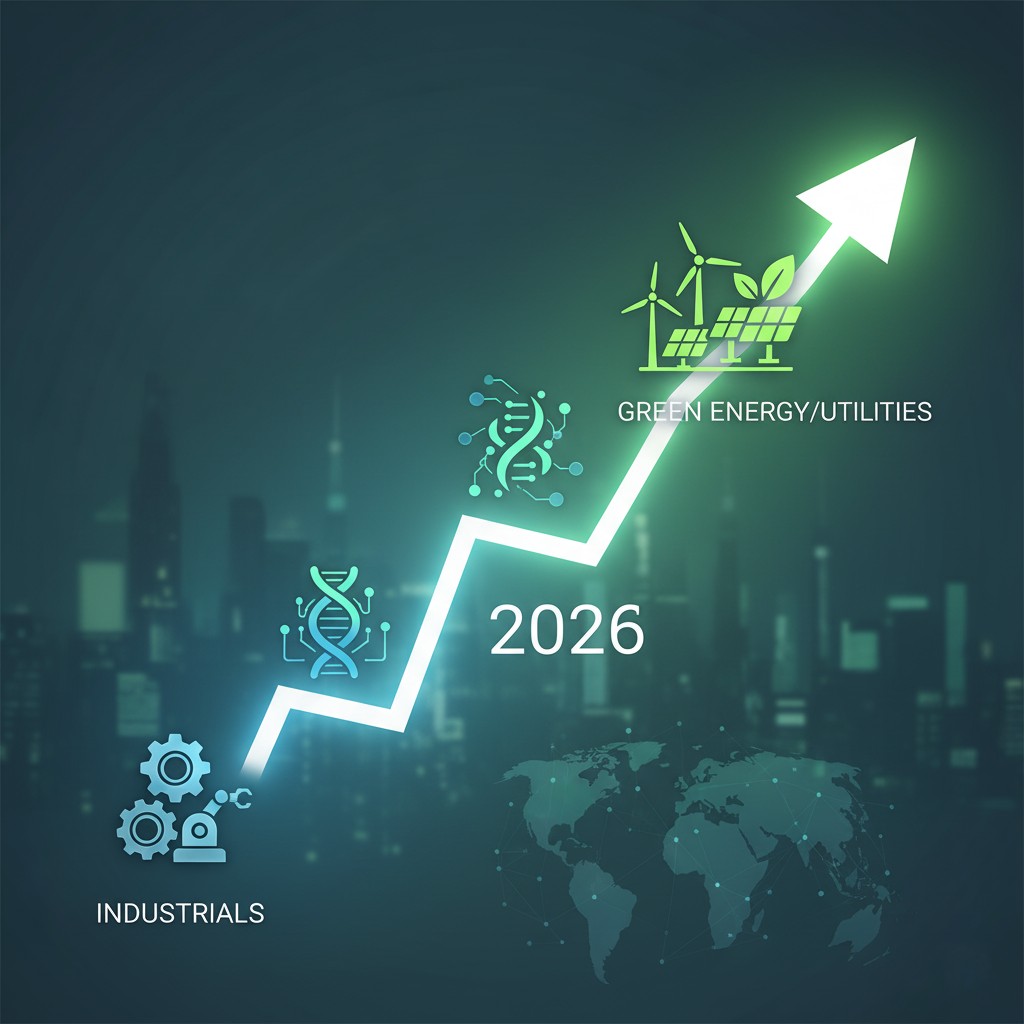
This article moves beyond the usual suspects. We will explore three often-overlooked sectors, each powered by an undeniable, multi-decade megatrend. These are not fleeting fads; they are deep, structural shifts in how the world works. For the investor seeking to build a resilient, diversified portfolio for 2026 and beyond, this is your guide to capturing the next wave of sustainable growth.
The Macro-Economic Stage for 2026
Before diving into specific sectors, it’s crucial to understand the stage on which they will perform. The world of 2026 is being defined by three major forces: a strategic re-wiring of global supply chains, the mathematical certainty of an aging population, and an accelerating, multi-trillion-dollar energy transition.
Sector 1: The Industrial Renaissance (The Great Re-Shoring)
For thirty years, the dominant narrative was globalization. The new narrative is resilience. The supply chain chaos of the early 2020s taught a painful lesson: fragility is expensive. In response, a massive wave of “on-shoring” and “near-shoring” is underway, as companies bring manufacturing capacity back home or to politically stable allies. This is not a simple reversal; it’s a high-tech re-industrialization, powered by automation, robotics, and advanced manufacturing.
The Analogy: Think of it as a city deciding to build robust local farms and water purification plants instead of relying solely on aqueducts from a distant, unstable region. This decision creates a multi-year boom for local engineers, construction firms, and advanced equipment makers.
This trend makes investing in industrial stocks one of the most tangible, long-term theses for the coming years. For broad exposure, investors can look to an Industrial Sector ETF. The Industrial Select Sector SPDR Fund (XLI), for example, holds a wide range of companies in machinery, aerospace, and logistics that are at the heart of this American industrial renaissance.
Sector 2: The Healthcare Imperative (Demographics is Destiny)
The “Silver Tsunami” is no longer a distant forecast; it is a present-day reality. The aging of the massive Baby Boomer generation is creating a non-discretionary, structural increase in demand for healthcare services. This isn’t just about more doctor visits. It’s about the entire ecosystem: breakthrough biotech therapies for age-related diseases, advanced medical devices, and new models of senior care. This is one of the most predictable long-term trends, making healthcare sector growth a cornerstone of many forward-looking portfolios.
The Analogy: This demographic shift is a tide that cannot be turned back. An investor can either stand on the shore and watch it rise or own the companies building the essential infrastructure—from innovative drugs to hospital beds—for a healthier, longer-living society.
To capture this broad trend, the Health Care Select Sector SPDR Fund (XLV) is a benchmark, holding a mix of pharmaceutical giants, biotech innovators, and healthcare providers. For those with a higher risk tolerance seeking to tap into the cutting edge, a more specialized fund like the iShares Biotechnology ETF (IBB) offers direct exposure to the engine of medical innovation.
Sector 3: The Energy Transition (Electrify Everything)
The global shift toward decarbonization is one of the largest capital reallocations in human history. This is a multi-trillion-dollar project that will span decades, and it goes far beyond just solar panels and wind turbines. It requires a complete modernization of our electrical grid to handle new energy sources, a massive build-out of energy storage solutions, and a secure supply chain for critical minerals like copper and lithium. These are the foundational elements of the new energy economy.
The Analogy: This is the 21st-century equivalent of the post-war build-out of the national highway system. That was a massive, government-supported project that fueled decades of growth for construction, materials, and automotive companies. The energy transition will do the same for a new generation of businesses.
These powerful long-term energy investment trends can be accessed through ETFs. To invest in the producers of renewable energy, the iShares Global Clean Energy ETF (ICLN) is a popular choice. For a more conservative approach, investing in the companies that will transmit and distribute this new energy via a utilities fund like the Utilities Select Sector SPDR Fund (XLU) is a smart way to play the essential “electrify everything” trend.
Conclusion: Investing in the Inevitable
The top performing market sectors of tomorrow are often found in the undeniable trends of today. While the siren song of high-flying tech stocks will always be alluring, building a truly resilient portfolio for 2026 and beyond means looking deeper. It means investing in the tangible, the necessary, and the inevitable.
A re-industrializing America, an aging America, and a greening America are not speculative bets; they are transformations already in motion. By diversifying into the Industrials, Healthcare, and Energy Transition sectors, investors can build a portfolio grounded in the powerful economic realities that will shape our future.
This article is for informational purposes only and should not be considered financial advice.