The 3 Best Bond ETFs to Buy for the 2026 Rate Outlook (Reviewed & Compared)
In the intricate dance of investment, the bond market is entering a phase of calculated complexity. As we approach 2026, the question is no longer *if* interest rates will remain volatile, but how to strategically navigate the fallout. For the discerning investor, this environment demands more than just a generic allocation to “bonds”; it requires a surgical selection of the right instruments. This is where the modern bond ETF truly shines.
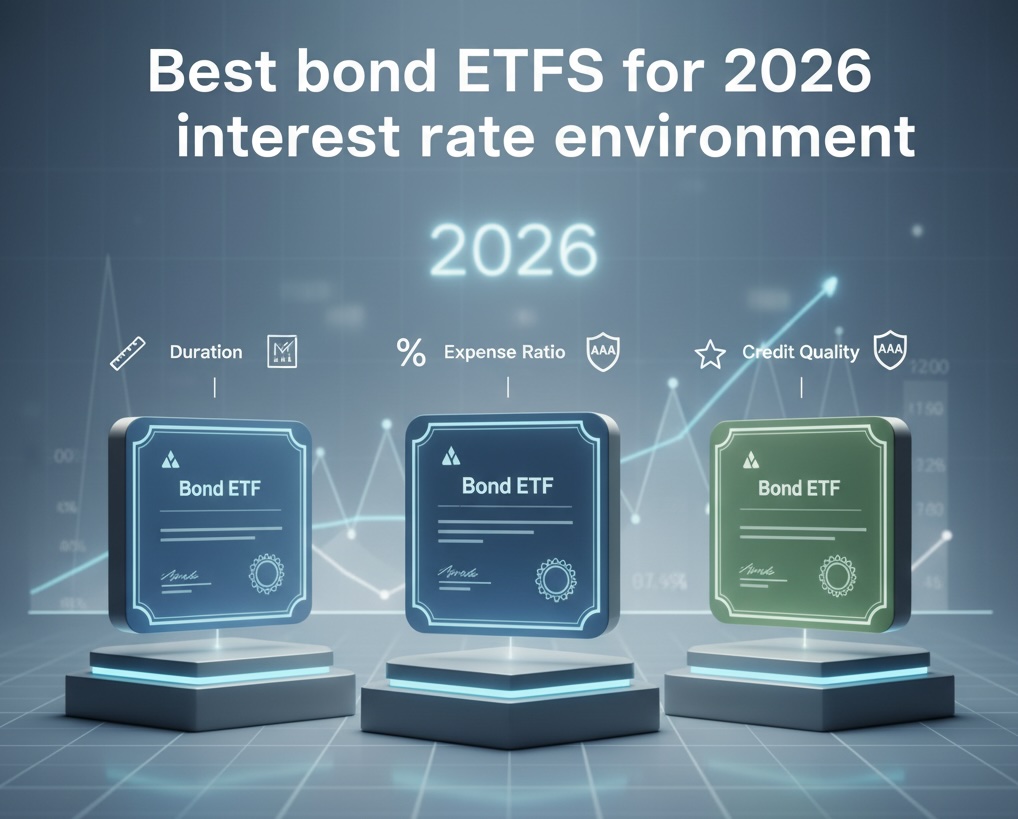
Forget the passive, set-and-forget bond funds of yesteryear. The current climate calls for specific tools designed for specific challenges. This deep-dive comparison will dissect three of the best bond ETFs for the 2026 interest rate environment, each chosen for its unique ability to counter rising rates and protect capital. We will analyze them on the metrics that matter most: duration, expense ratio, and credit quality, helping you make a decision rooted in data, not speculation.
The Crucial Metrics for Choosing a Bond ETF in 2026
Before we unveil our top contenders, we must establish the analytical framework. In a rising rate environment, three key metrics become paramount:
- Duration: This is the single most important measure of a bond fund’s sensitivity to interest rate changes. Think of it as a seesaw—the longer the duration, the more the fund’s price will drop when rates rise. For 2026, a short duration bond ETF is your primary defense.
- Expense Ratio: In a world of modest bond yields, fees matter immensely. A low expense ratio ensures that more of the fund’s return ends up in your pocket. We will scrutinize the bond ETF expense ratio comparison closely.
- Credit Quality: This reflects the creditworthiness of the underlying bond issuers. High credit quality (e.g., U.S. Treasuries) means lower default risk, a crucial factor during economic uncertainty. We will focus on funds with strong credit quality in bond funds.
Our three chosen ETFs are not competitors in a traditional sense; they are specialists, each excelling at a different strategic objective. Let’s bring them into the light.
Contender 1: The Fortress – Vanguard Short-Term Treasury ETF (VGSH)
When the primary goal is capital preservation, VGSH stands as a veritable fortress. This ETF invests exclusively in short-term U.S. Treasury bonds, the gold standard of credit quality.
VGSH at a Glance
- Ticker: VGSH
- Primary Holding: U.S. Government Bonds
- Average Duration: ~1.9 years
- Expense Ratio: 0.04%
The Analysis: With an average duration under two years, VGSH is remarkably insulated from interest rate shocks. Its rock-bottom expense ratio of 0.04% is a hallmark of Vanguard’s investor-friendly approach. The trade-off for this safety is a modest yield, but that is not its purpose. Its purpose is to be a stable anchor in a volatile sea.
Pros:
– Extremely low interest rate risk due to short duration.
– Highest possible credit quality (U.S. Treasuries).
– Exceptionally low expense ratio.Cons:
– Lower yield compared to other bond types.
– Offers no specific protection against inflation.
Who is it best for? The conservative investor whose top priority is protecting principal. It serves as an excellent cash alternative or as the stable core of a broader bond portfolio.
Contender 2: The Adapter – WisdomTree Floating Rate Treasury ETF (USFR)
Our second contender, USFR, offers a more dynamic approach. This is a premier floating rate bond ETF, a sophisticated instrument designed to thrive when rates are climbing.
Think of a fixed-rate bond as a pier and a floating rate bond as a boat. When the tide (interest rates) rises, the pier is submerged, but the boat rises with it. USFR’s holdings are Treasury notes whose interest payments reset periodically based on the latest Treasury bill auction rates. This means as the Fed raises rates, the income generated by USFR adjusts upward.
USFR at a Glance
- Ticker: USFR
- Primary Holding: Floating Rate U.S. Treasury Notes
- Average Duration: ~0.02 years (near zero)
- Expense Ratio: 0.15%
The Analysis: The near-zero duration is the headline feature, making USFR almost completely immune to price drops from rate hikes. Its yield automatically adapts to the new, higher-rate environment. The expense ratio of 0.15% is higher than VGSH’s but reasonable for such a specialized and effective tool.
Pros:
– Virtually no interest rate risk; price is highly stable.
– Yield increases automatically as market rates rise.
– Backed by the full faith and credit of the U.S. government.Cons:
– In a falling rate environment, its yield would decrease.
– Expense ratio is higher than a simple Treasury ETF.
Who is it best for? The tactical investor who is confident in a rising-rate forecast for 2026 and wants their bond income to rise in lockstep. It is a powerful hedge against rate hikes.
Contender 3: The Inflation Hedge – Vanguard Short-Term Inflation-Protected Securities ETF (VTIP)
Our final specialist tackles the other side of the 2026 coin: inflation. A TIPS ETF for inflation is designed to protect your purchasing power when the cost of living is rising.
VTIP invests in Treasury Inflation-Protected Securities (TIPS). These bonds have a principal value that adjusts upward with the Consumer Price Index (CPI). When inflation rises, the bond’s principal increases, and its interest payments (which are a fixed percentage of the principal) also increase. It’s a bond with a built-in cost-of-living adjustment.
VTIP at a Glance
- Ticker: VTIP
- Primary Holding: U.S. Treasury Inflation-Protected Securities
- Average Duration: ~2.5 years
- Expense Ratio: 0.04%
The Analysis: VTIP combines the credit safety of Treasuries with direct, mechanical protection against inflation. Its short duration keeps interest rate risk relatively low, while the inflation adjustment mechanism provides a unique source of return during inflationary periods. The 0.04% expense ratio is, again, exceptionally low. For more data, you can consult sources like
Pros:
– Principal and income increase with inflation (CPI).
– Low expense ratio and high credit quality.
– Relatively low duration compared to longer-term TIPS funds.Cons:
– Can underperform in periods of low or no inflation.
– The “real yield” can sometimes be negative if demand is very high.
Who is it best for? The investor whose primary concern is that inflation will run hotter than expected, eroding the real return of their fixed-income investments.
Conclusion: Choosing Your Specialist for the 2026 Mission
The “best” bond ETF for 2026 is not a single fund, but a strategic choice based on your primary objective. We have reviewed three elite specialists:
- VGSH (The Fortress): For maximum safety and capital preservation.
- USFR (The Adapter): To have your income rise along with interest rates.
- VTIP (The Inflation Hedge): To protect your purchasing power from the ravages of inflation.
A sophisticated investor might not choose just one, but blend them. For instance, a core holding in VGSH for stability, complemented by a position in USFR to benefit from rate hikes, creates a robust and adaptable fixed-income strategy. The key is to move beyond generic bond exposure and select the precise tools for the job. In the nuanced financial landscape of 2026, this targeted approach will be the defining characteristic of a successful portfolio.
This article is for informational purposes only and should not be considered financial advice.