Caught in the Middle? 5 Financial Survival Strategies for the Sandwich Generation
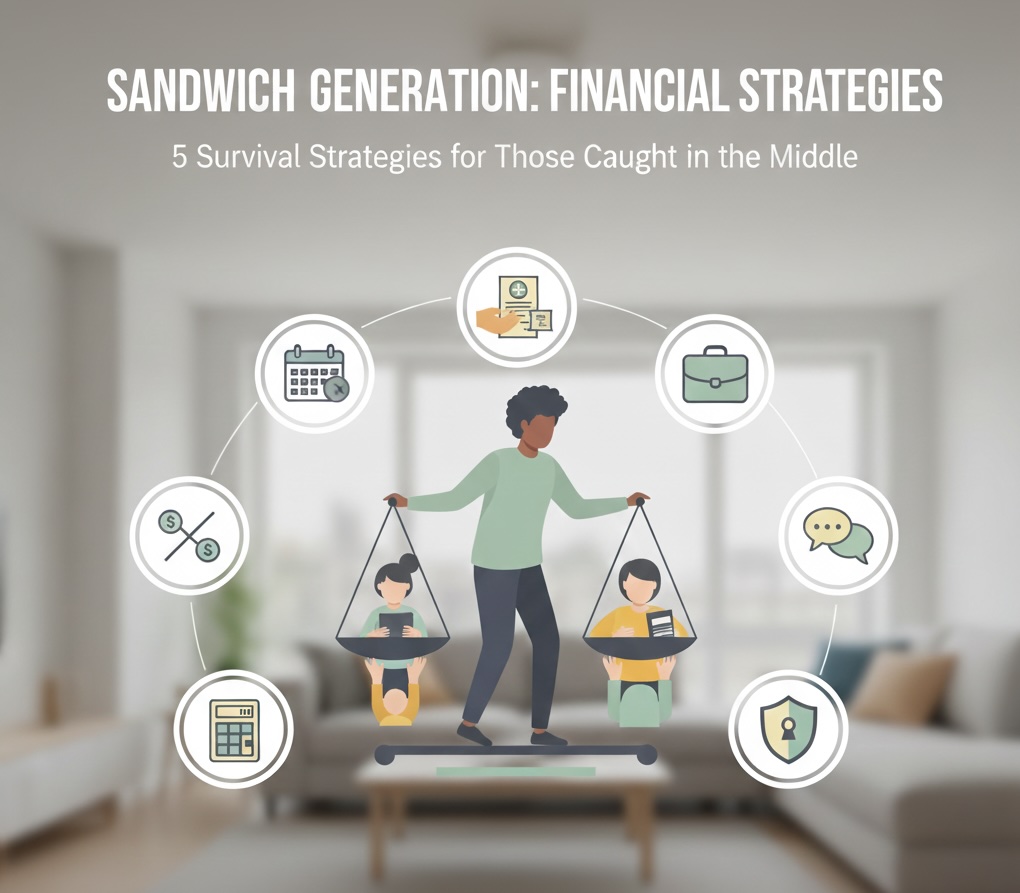
You’re reviewing a college tuition bill for your teenager when your phone rings. It’s your elderly mother; her furnace just broke, and she doesn’t have the savings to cover the repair. In that moment, you feel an immense pressure from two directions—a financial vise squeezing you between the needs of your growing children and your aging parents. If this scenario feels familiar, you are not alone. You are part of the “Sandwich Generation.”
According to data from the Pew Research Center, a significant portion of adults in their 40s and 50s are caring for aging parents and children financially. This dual responsibility is not just a strain on your wallet; it’s a drain on your time, energy, and emotional well-being. The core question becomes a constant, nagging worry: How do you balance it all without sacrificing your own financial future? Here are five essential survival strategies to help you navigate this complex life stage.
1. The “Oxygen Mask” Principle: Secure Your Own Retirement First
In the pre-flight safety briefing, you are always told to put on your own oxygen mask before helping others. This isn’t selfish; it’s logical. You can’t help anyone if you run out of air. The same principle is the absolute cornerstone of financial strategies for the sandwich generation. Your retirement account is your financial oxygen mask.
Failing to fund your own retirement to support other family members can turn a temporary financial strain into a permanent, multi-generational crisis. Your goal is to be a financial support, not a future financial burden to your own children.
Before allocating a single dollar to college funds or parental support, ensure you are contributing enough to your 401(k) to get the full employer match and are on track with your IRA contributions. Pausing contributions, even for a few years, can have a devastating impact due to the loss of compound growth.
2. Set Financial Boundaries: The Power of a Loving “No”
This is often the most emotionally difficult strategy, yet it is the most critical for long-term sustainability. Unlimited financial support is rarely sustainable. Learning how to set setting financial boundaries with family is not about withholding love; it’s about structuring your help so you can provide it for the long haul without burning out.
How to Frame the Conversation
Instead of a blunt “I can’t help,” try a collaborative approach:
- With Parents: “Mom, Dad, I want to help you in every way I can. Let’s sit down together and look at all your expenses and income so we can make a sustainable plan. I can commit to contributing X amount per month.”
- With Children: “We are so proud you’re going to college. We have saved X amount for your education. Let’s work together to apply for scholarships and loans to cover the rest.”
A structured allowance is more manageable than sporadic, crisis-driven handouts. It allows you to budget effectively and prevents financial decisions from being purely emotional.
3. Become a Benefits Detective: Uncover Hidden Resources
Your employer and the government may offer valuable resources you’re not even aware of. It’s time to do some digging. Many are surprised to learn about the potential use of a dependent care fsa for elderly parents. If your parent is your legal dependent, you may be able to use pre-tax dollars for their day care or nursing services.
Other workplace benefits to investigate include:
- Employee Assistance Programs (EAPs): Often provide free consultations with financial planners or legal experts.
- Legal Plans: Can help with essential estate planning documents for your parents, like a will or power of attorney, at a low cost.
- Family and Medical Leave Act (FMLA): Provides job-protected, unpaid leave for caregiving.
4. The Family CEO: Hold a Financial Planning Meeting
Stop being a reactive problem-solver and become a proactive family leader. A formal family financial planning meeting can transform the dynamic from chaotic to collaborative. If you have siblings, their involvement is crucial. This isn’t about demanding money; it’s about sharing the responsibility—be it financial, logistical, or emotional.
A simple agenda can guide the conversation:
- Assess the Situation: Gently gather information on your parents’ assets, debts, income, and insurance policies.
- Understand Their Wishes: Discuss their preferences for long-term care and end-of-life arrangements.
- Define Roles: One sibling might handle bill payments, another medical appointments, and a third could contribute financially.
- Create a Shared Plan: Document the plan and agree to revisit it annually.
5. Balance the Buckets: A Strategy for College and Elder Care
Once your retirement is secure, how do you decide between how to balance college savings and elder care costs? The hard truth is that there are endless loans for college, but there are no loans for retirement or elder care. While this doesn’t mean you shouldn’t save for college, it provides a clear order of priority.
Consider a “good enough” approach to college funding. Your responsibility is to help your children get a good education, not necessarily a debt-free one from their dream school. Fully funding a 529 plan at the expense of your parents’ basic needs or your own retirement is a recipe for disaster. A frank discussion about affordable state schools, community college, and the responsible use of student loans is a vital part of this financial balancing act.
Conclusion: From Vise to Vision
Being caught in the sandwich generation is a profound challenge rooted in love and responsibility. The immense pressure you feel is a testament to your commitment. However, the solution is not to simply work harder or worry more. The solution is to build a framework.
By securing your own future first, setting loving boundaries, leveraging all available resources, and leading with a clear plan, you transform yourself from a victim of circumstance into the architect of your family’s financial well-being. You can care for both your children and your parents effectively—not by sacrificing your future, but by securing it.
This article is for informational purposes only and should not be considered financial advice.