AI Boom vs. Dot-Com Bust: 5 Charts That Show If We’re in a Bubble
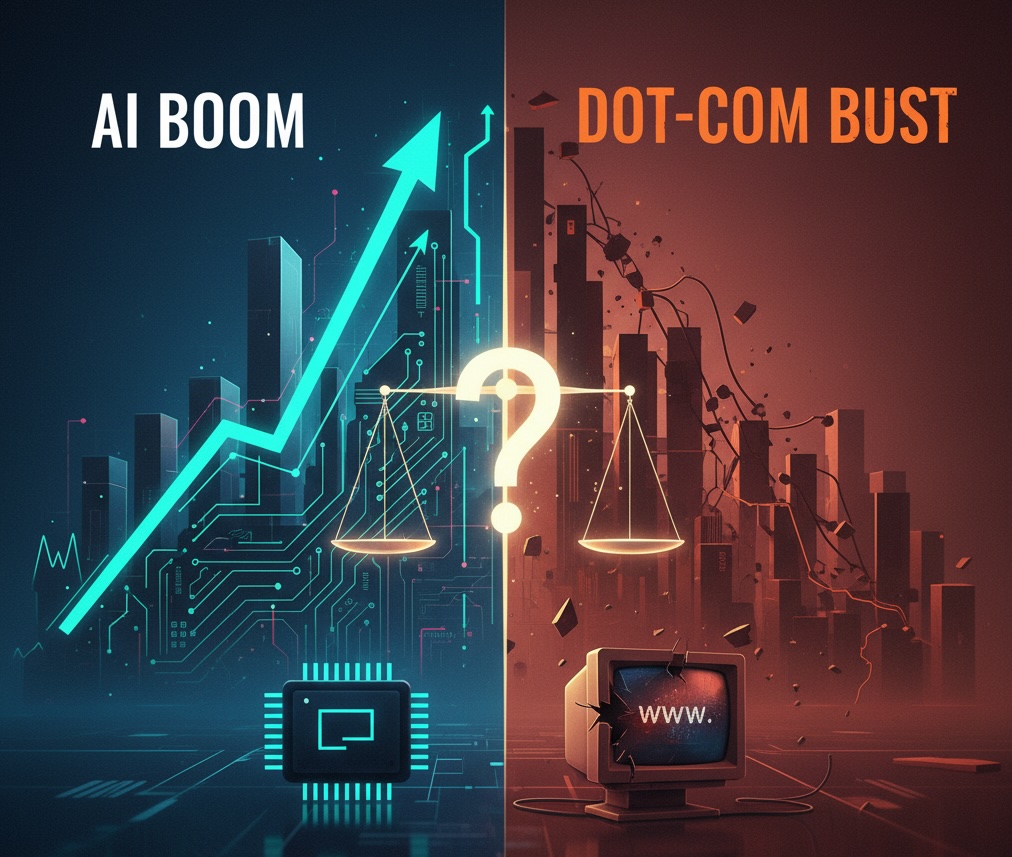
The whispers are getting louder. Every time a tech stock like Nvidia soars, the ghost of bubbles past chills the conversation. Are we living in 2000 all over again? Is this explosive growth in AI stocks a rational revolution or just a prelude to another spectacular dot-com bust? You’re right to be cautious. The scars of the year 2000, when fortunes built on digital dreams vanished overnight, run deep. But fear, without data, is just noise. This article will guide you through the five crucial charts that separate the signal from the noise, offering a clear, evidence-based perspective on whether today’s AI boom is a repeat of history or a different beast entirely.
1. The Profitability Mirage: Dreams vs. Dollars
The defining feature of the dot-com era was its magnificent disregard for profits. Companies like Pets.com and Webvan became market darlings on the promise of future dominance, burning through venture capital with no sustainable revenue in sight. They were selling a dream. Today’s AI leaders, in contrast, are selling products—very, very profitable ones.
Look at the titans of the AI space: Nvidia, Microsoft, Google, Amazon. These aren’t fledgling startups with a catchy URL. They are global behemoths with staggering cash flows. While the dot-com darlings were posting losses, today’s AI giants are posting record-breaking profits. This isn’t a bet on a future possibility; it’s a response to current, massive earnings.
The Key Takeaway: The dot-com bubble was inflated by speculative hope. The AI boom is being fueled by realized profits.
2. The Valuation Question: Is Price Divorced from Reality?
Valuation, specifically the Price-to-Earnings (P/E) ratio, is where the bubble talk gets serious. A high P/E ratio means investors are paying a premium for future growth. In 2000, tech valuations reached absurd levels. Cisco, the Nvidia of its day, traded at over 200 times earnings. It was priced for perfection, and then some.
Today, a stock like Nvidia certainly has a high P/E ratio, reflecting immense growth expectations. However, it’s a different stratosphere from the dot-com peaks. More importantly, the “E” in P/E (earnings) is growing at an explosive rate, which provides a fundamental anchor to the valuation. This is a crucial part of understanding AI stock valuation. While today’s numbers are high, they are not entirely unmoored from reality in the way they were in 2000.
3. Market Infrastructure vs. Speculative Applications
Think of the economy as a country. The dot-com bubble was largely built on companies creating niche consumer applications (the digital storefronts) before the foundational infrastructure (the highways and power grid) was even properly built. Many of these ideas were simply too early; the internet speeds and user base couldn’t support them.
The current AI boom is the inverse. The primary drivers of the market today are the companies building the essential infrastructure. Nvidia isn’t selling a quirky app; it’s selling the picks and shovels—the GPUs—for the entire AI gold rush. Microsoft and Amazon are providing the cloud computing power. This is a boom centered on building the foundational layer, which is a far more tangible and defensible market position than a speculative application.
4. Capital Discipline: Cash Burn vs. Cash Hoards
The mantra of 1999 was “growth at all costs.” Venture capital flowed freely, and companies burned through it in a race for eyeballs, not profits. Balance sheets were often a liability. This is one of the clearest tech bubble warning signs from the past.
Contrast that with today. The AI leaders have fortress-like balance sheets. They are sitting on mountains of cash and generating enormous free cash flow. They aren’t burning money; they are printing it. This financial strength allows them to invest heavily in R&D, acquire competitors, and weather economic downturns—a luxury the dot-com startups never had.
The Key Takeaway: Today’s tech giants are characterized by financial fortification, not the financial fragility that defined the dot-com era.
5. The Nature of the Revolution: Information Access vs. Intelligence Creation
The final, and perhaps most profound, difference lies in the nature of the technological shift itself. The internet revolution was about access to information. It connected the world and democratized data. It was transformative, but its immediate economic impact was diffuse.
The AI revolution is about the creation of intelligence. It’s a technology that doesn’t just present information but acts upon it, learns from it, and generates new output. Its potential to augment productivity across every single economic sector—from drug discovery to logistics to customer service—is arguably more direct and immediate than the internet’s was in its early days. This suggests a path to profitability that is faster and wider, providing a stronger foundation for market growth.
Conclusion: It’s Not 2000, But That Doesn’t Mean There’s No Risk
So, are we in a bubble? Based on the evidence, the current AI boom is not a carbon copy of the dot-com bust. The market is being led by highly profitable, cash-rich infrastructure builders, not speculative, cash-burning app makers. Valuations are high, but they are tethered to phenomenal earnings growth.
However, this does not eliminate risk. The market’s enthusiasm could still outpace reality, leading to painful corrections. Pockets of speculative froth undoubtedly exist. The crucial insight for investors is that the game has changed. The challenge is no longer about betting on which digital dream might survive. Instead, it’s about identifying the quality companies that are building the tangible future. The strategy for investing in AI safely is to focus on the fundamental strength that was so glaringly absent in the year 2000.
This article is for informational purposes only and should not be considered financial advice.