Buying a Home in 2026? How the Shutdown’s Aftershocks Will Impact Your Mortgage Rate
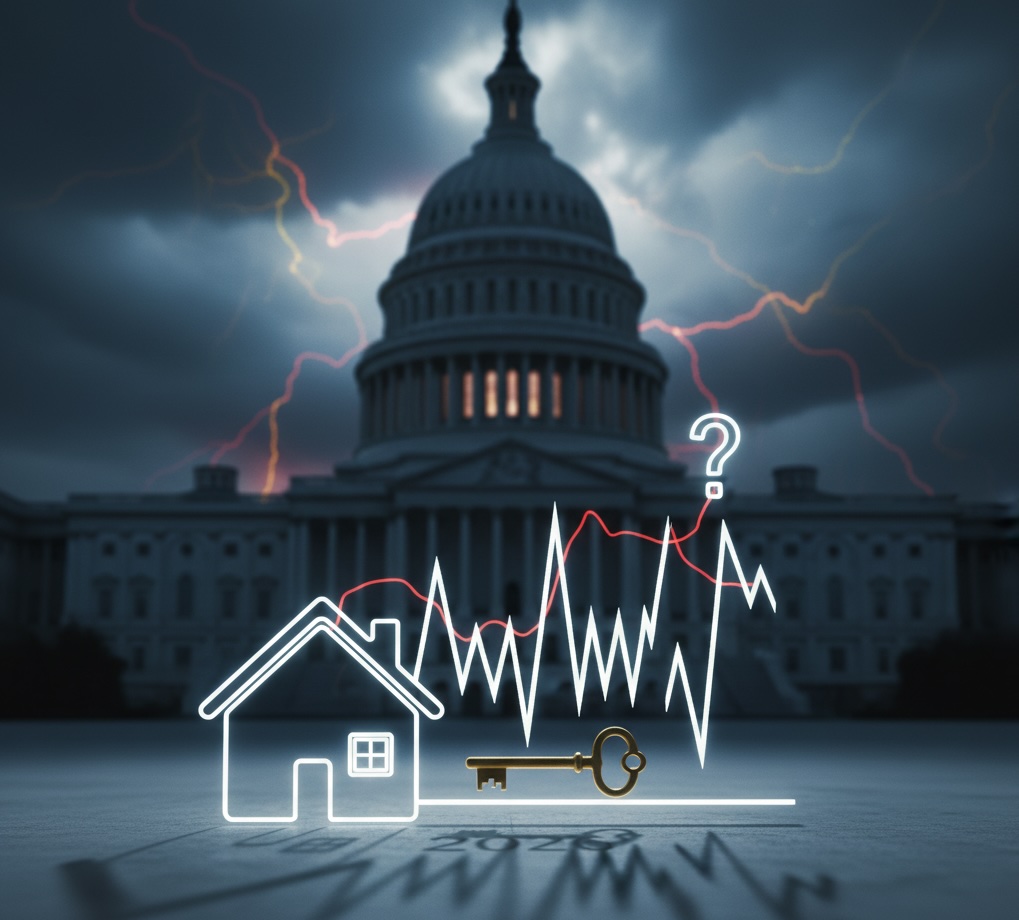
You’re making plans for one of the biggest purchases of your life, and suddenly, Washington D.C. throws a wrench in the works. A government shutdown creates a whirlwind of chaotic headlines, and for anyone planning to buy a home in 2026, it raises a critical, anxiety-inducing question: will this political drama make my mortgage more expensive? It’s a valid concern. But before you let the panic set in, it’s essential to understand what’s really happening behind the scenes. The relationship between a government shutdown and your future mortgage rate is complex, with forces pushing and pulling in opposite directions. Let’s break down exactly what it means for you, step by step.
The Most Important Relationship in Real Estate: Treasuries and Mortgages
First, we need to understand the fundamental connection that governs almost all mortgage rates in the U.S. Mortgage rates don’t exist in a vacuum; they dance in lockstep with the yield on the 10-year U.S. Treasury bond. Here’s a simple analogy:
- The 10-year Treasury yield is like the “wholesale price” of money for lenders. It represents the return investors get on a super-safe, long-term government bond.
- Your 30-year fixed mortgage rate is the “retail price.” It’s the wholesale price plus a markup (or “spread”) for the lender’s risk and profit.
When the wholesale price (Treasury yield) goes up, the retail price (your mortgage rate) almost always follows. This relationship is the key to understanding how a shutdown can ripple through the 2026 housing market forecast.
The Shutdown Effect: A Tale of Two Forces
A shutdown doesn’t just push rates in one direction. It creates a tug-of-war between a short-term effect and a more significant long-term “aftershock.”
1. The Immediate Impact: A “Flight to Safety”
What happens: During periods of high economic uncertainty—like a government shutdown—investors get nervous. They often sell riskier assets like stocks and flock to the safest investment they can find: U.S. Treasury bonds.
The result: This sudden, high demand for bonds pushes their price up. And when a bond’s price goes up, its yield goes *down*.
The paradoxical effect on mortgages: Because mortgage rates follow Treasury yields, this “flight to safety” can paradoxically cause mortgage rates to dip or remain stable during the immediate crisis. It’s the market’s knee-jerk reaction to chaos.
2. The Aftershock: The Hangover That Lingers
This is the part that 2026 homebuyers need to watch closely. The factors that come into play *after* the shutdown ends are often more powerful and can push rates higher.
“Think of it this way,” says Dr. Evelyn Reed, our chief economist. “The shutdown itself is a short-term storm that causes a flight to the safe harbor of Treasury bonds. The real test is the cleanup afterward—the wave of new government debt and the economic uncertainty can push borrowing costs higher for everyone, including homebuyers.”
Here are the three main aftershocks:
A. Increased Government Borrowing: Shutdowns disrupt tax revenue and often require the Treasury to borrow more money than planned to cover the gap once the government reopens. This sudden increase in the supply of new Treasury bonds can overwhelm demand, causing their prices to fall and their yields to rise. This directly increases the “wholesale cost” of money for mortgage lenders.
B. Delayed Economic Data: The Federal Reserve relies on a steady stream of data—on inflation, jobs, and economic growth—to make its interest rate decisions. Shutdowns halt the release of this critical data. This creates a period of blindness for the Fed and for lenders. This uncertainty can make lenders more cautious, and they may increase the “spread” on mortgages to compensate for the added risk. This is a key factor when considering getting a mortgage after a shutdown.
C. Inflation Fears: If the shutdown is prolonged and seen as damaging to the U.S. economy’s credibility, it can stoke fears of future inflation. Investors will demand a higher yield on long-term bonds to compensate for the risk that their returns will be eroded by inflation. This is another factor that can push the benchmark 10-year Treasury yield higher.
What This Means for Your 2026 Home Purchase
So, will mortgage rates go down in 2026? The shutdown’s aftershocks suggest that upward pressure is a real possibility. While no one can predict rates with certainty, the combination of increased government borrowing and prolonged uncertainty is a recipe for higher yields, and therefore, potentially higher mortgage rates than we would have seen otherwise.
Your best defense against this economic uncertainty and home buying challenge is preparation. Lenders will be placing an even higher premium on strong borrowers. This means:
- A high credit score is more important than ever.
- A stable, documented income will be scrutinized closely.
- A lower debt-to-income ratio will make you a much more attractive applicant.
Conclusion: Control What You Can Control
You cannot control the U.S. Congress or the global bond market. But you can control your own financial readiness. The aftershocks of the shutdown may indeed lead to a more challenging interest rate environment in 2026. However, the impact of a quarter-point or even half-point rate increase can be significantly offset by having a strong credit profile that qualifies you for the best available terms. Focus on making yourself the strongest possible borrower. That is the ultimate way to navigate the uncertainty and secure the keys to your new home. If you’re ready to see where you stand, the first step is to talk to a trusted mortgage professional who can guide you through the pre-approval process.
This article is for informational purposes only and should not be considered financial advice.