The Retiree’s Guide to Downsizing: A 10-Step Checklist for a Simpler, Richer Life
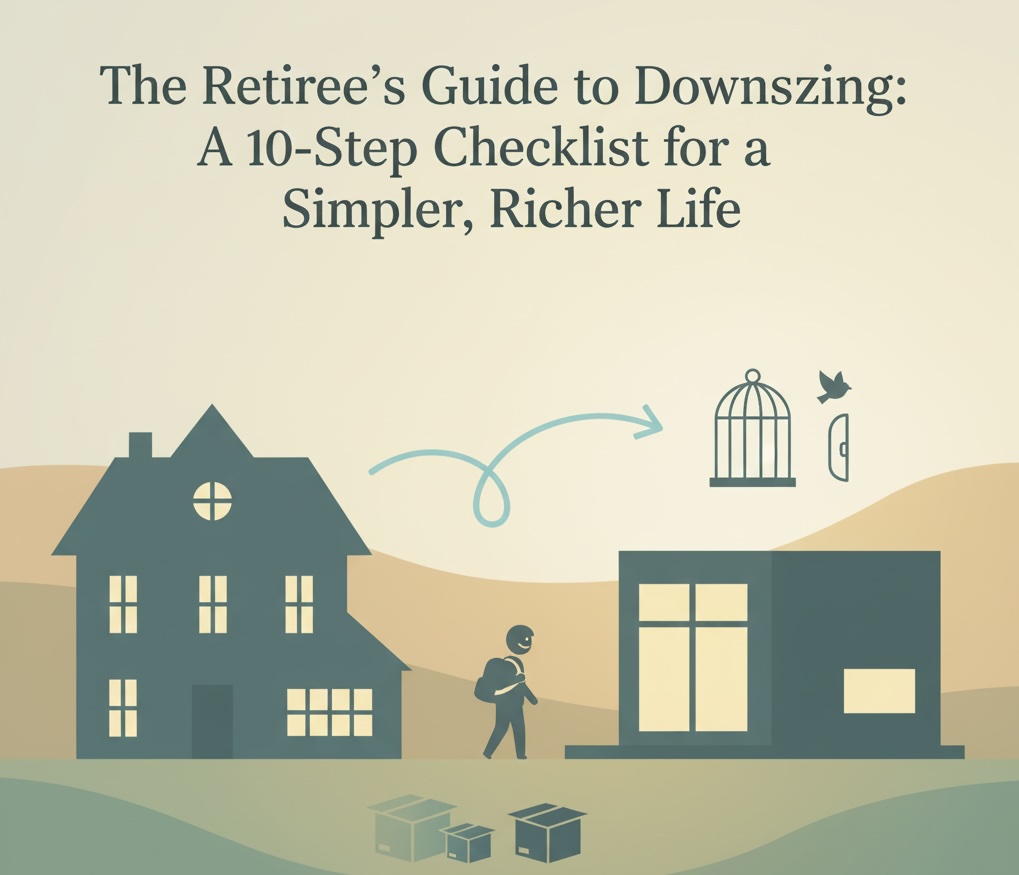
The house feels different now. The echoes of children who have long since moved out linger in quiet hallways. Rooms once filled with life now serve as storage for memories, and the weekend that used to be for family fun is now consumed by maintenance on a home that suddenly feels too big. If this sounds familiar, you’re standing at a crossroads faced by millions of retirees—a decision point that holds the key to a new kind of freedom.
Many view downsizing as an act of letting go, a reluctant retreat. But this perspective is fundamentally flawed. Downsizing is not about loss; it is a strategic and powerful act of gaining. It’s about trading unused space for financial flexibility, swapping endless upkeep for more time to travel, and exchanging the burdens of a large home for a simpler, richer life. This is not just a move; it’s a lifestyle upgrade. Here is your 10-step checklist to navigate the journey with confidence.
The Ultimate Downsizing for Retirement Checklist
Step 1: Define Your “Why” (The Vision)
Before you call a realtor or pack a single box, the most critical step is to clarify your motivation. This “why” will be your anchor through every stage of the process. Are you seeking to:
- Unlock home equity to fund your retirement?
- Eliminate your mortgage payment?
- Reduce maintenance, property taxes, and utility bills?
- Move closer to family or a more desirable climate?
- Live in a community with more social opportunities?
Write down your top three reasons. When the process feels overwhelming, returning to this vision will provide clarity and purpose.
Step 2: Analyze the Financials (The Bottom Line)
Downsizing is a major financial event. You must go in with a clear-eyed view of the numbers.
- Estimate Your Net Proceeds: Start with your home’s estimated market value, then subtract your remaining mortgage balance, potential real estate agent commissions (typically 5-6%), and other closing costs. This will give you a rough idea of the cash you’ll walk away with.
[Internal Link: How to Accurately Estimate Your Home's Value] - Budget for the New Home: Will you buy or rent? Factor in the down payment, monthly payments, property taxes, insurance, and potential HOA fees of your new, smaller home.
- The Result: The difference between your net proceeds and your new housing costs is the capital you’ve unlocked for your retirement.
Step 3: Understand the Tax Implications
One of the greatest financial benefits for seniors is the tax rule on home sales. It’s crucial to understand the capital gains tax on real estate for seniors.
Call-out Box: The Home Sale Tax Exclusion
According to the IRS, if you have owned and lived in your primary residence for at least two of the five years before the sale, you can exclude a significant amount of profit from capital gains tax.
- Single filers can exclude up to $250,000 of profit.
- Married couples filing jointly can exclude up to $500,000 of profit.
This is a massive advantage for retirees who have built up substantial equity over decades. For specific advice, always consult a tax professional and refer to official guidelines.
[External Link: IRS Publication 523, Selling Your Home]
Step 4: Explore “Where To?” (The Destination)
The question of where to retire and downsize is as important as the “why.” Consider the pros and cons of downsizing in retirement to various housing types:
- A Smaller Single-Family Home: Offers continued privacy and a yard, but still requires maintenance.
- A Condominium or Townhouse: Drastically reduces exterior maintenance in exchange for HOA fees and shared walls.
- A 55+ Active Adult Community: Provides a built-in social network and amenities like pools, clubhouses, and fitness centers.
Step 5: The Great Decluttering (The Emotional Core)
This is often the most challenging step. You’re not just sorting through objects; you’re sorting through a lifetime of memories. Address the emotional side of downsizing with a structured approach.
- The Four-Box Method: Get four large boxes and label them: Keep, Sell, Donate, Discard.
- Start Small: Don’t try to tackle the whole house at once. Begin with a single closet or room.
- Digitize Memories: Scan old photos, letters, and children’s artwork to preserve the memory without the physical clutter.
Step 6: Prepare the House for Sale
To maximize your sale price, your home needs to shine. Focus on high-impact, low-cost improvements:
- Declutter and Depersonalize: A buyer needs to be able to envision their own life in the space.
- A Fresh Coat of Paint: Neutral colors can make a home feel brighter and larger.
- Curb Appeal: Simple landscaping and a welcoming entryway make a powerful first impression.
Step 7: Assemble Your Team of Experts
You don’t have to do this alone. A strong team is your best asset.
- A Seniors Real Estate Specialist (SRES®): This designation means the agent has specialized training in meeting the unique needs of clients over 50.
- A Financial Advisor: To help you manage the proceeds from the sale and integrate them into your retirement income plan.
- A Professional Organizer: If the decluttering process is too overwhelming, an expert can provide invaluable, impartial help.
Step 8: The Search for Your New Home
When looking for your next home, prioritize features that will support you for years to come:
- Single-Floor Living: Avoid stairs that could become a challenge later.
- Accessibility Features: Look for wider doorways, walk-in showers, and lever-style door handles.
- Low-Maintenance Materials: A small yard, durable flooring, and modern windows can save you time and money.
Step 9: Manage the Logistics of the Move
A successful move is a well-planned one. Create a moving checklist that includes:
- Booking a reputable moving company well in advance.
- Arranging to transfer utilities and forward your mail.
- Packing a “Day One” box with essentials you’ll need immediately upon arrival.
Step 10: Embrace Your New Beginning
Once the boxes are unpacked, it’s time to enjoy the payoff. Calculate the money you’re saving each month on utilities and maintenance. Plan a trip with the equity you’ve unlocked. Enjoy the free time you’ve gained by not having to manage a large property. You haven’t lost a home; you’ve gained a lifestyle.
Conclusion: Designing Your Best Retirement
Downsizing your home is one of the most powerful strategic decisions you can make in retirement. It is a proactive choice to design a life with more freedom, flexibility, and financial peace of mind. By following a clear, step-by-step process and leaning on the right experts, you can transform this daunting task into an empowering journey. You are not just moving out; you are moving forward into the retirement you’ve always envisioned.
This article is for informational purposes only and should not be considered financial advice.